
Vermilion Parole and Probation Compared
Parole and probation both permit a person to live in the community under stated rules, but they begin in different ways. Parole follows release from confinement while the balance of a sentence continues under Louisiana Department of Public Safety & Corrections supervision. Probation ordinarily results from a court sentence, often after the court suspends all or part of confinement. A Vermilion Parish probationer may never have served a state-prison term. Neither status means that the person is now housed in the Vermilion Parish Correctional Center.
The legal papers matter. A parole certificate states release conditions and the term being served. A probation judgment and sentencing minutes state the court’s order. Louisiana LAVNS may show either kind of community supervision, but its public display is a status aid rather than a substitute for those records.
Terminology can also shift by record. “Good-time parole supervision” describes a community-supervision status tied to Louisiana’s release framework; it is not the same as a discretionary parole grant after a hearing. “Full term” refers to the sentence endpoint, while “discharge” should be used only when the responsible agency confirms completion. Matching those labels prevents a reader from treating any community status as unrestricted freedom.
| Point | Parole | Probation |
|---|---|---|
| How it begins | Release from confinement before the sentence fully ends | A criminal court imposes community supervision as part of sentence |
| Decision source | Committee on Parole or a statutory release framework | Sentencing court |
| Main record | Parole decision, certificate, and DPS&C supervision record | Judgment, sentencing minutes, and supervision record |
| How it ends | Confirmed discharge, sentence expiration, or revocation | Confirmed completion, early termination, or revocation |
Check Vermilion Post-Release Supervision
Louisiana directs public status searches to LAVNS through VINELink. DPS&C says the system includes people under probation or parole as well as people in prison and updates every 24 hours. Search one person and compare the displayed agency, ID, and status. A missing result does not prove that supervision ended. Spelling, timing, record scope, and full discharge can affect what appears.
- Gather the full name, date of birth, DPS&C number or case number, and the parish tied to the case.
- Open Louisiana LAVNS, search by the most exact identifier available, and compare all visible identity fields.
- Read whether the result reports incarceration, probation, parole, another agency, or a custody event.
- Use the DPS&C office directory to identify the responsible district. Vermilion Parish is served through Lafayette.
- Ask the district office to confirm public supervision status and the proper reporting office. Use the court minutes when probation terms need clarification.
- Record the effective date and any public end date, then obtain proof of discharge before saying supervision is complete.
The Vermilion Parish released-inmate search path helps distinguish a community release from a transfer when the person also disappeared from the county roster.
Vermilion Probation Office Route
The Lafayette District Office of Probation and Parole serves Acadia, Lafayette, and Vermilion parishes. It is the regional route for a public question about a Vermilion Parish supervision record. The office is not the parish jail and cannot turn a roster disappearance into proof of release. Start with the person’s identifier and ask which office owns the record, since residence and reporting assignments can change.
Lafayette District Probation and Parole
237 West Willow Street
Lafayette, LA 70501
337-262-5444
Monday through Friday, 8:00 a.m. to 4:30 p.m.
Statewide conditions generally call for reporting within 48 hours after release and monthly reporting by the fifth. The individual certificate and officer’s instructions control. Do not infer a violation from a general schedule or from an unanswered public query.
Ask narrow questions. Useful points include whether the record is active, whether it is probation or parole, which district holds responsibility, and whether a public discharge has been entered. The district should not be asked to disclose a home address or protected case detail. If the office cannot confirm more, request the existing public record through DPS&C and cite the person’s identifier.
The official office page also describes monthly probation-orientation meetings. Officers and a sentencing judge explain conditions and answer process questions. That regional practice gives Vermilion Parish probation cases a specific orientation route beyond a statewide database.
Vermilion Parole Decisions and Release
The Louisiana Committee on Parole makes parole decisions within the Board of Pardons and Committee on Parole structure. The official parole overview explains eligibility and the hearing process. Hearings are public through the published headquarters and remote framework. A hearing is usually scheduled within nine months of eligibility, according to the agency, but that timing is not a release promise.
The parole dockets page publishes hearing weeks, agendas, and results. It showed frequent hearing weeks during the researched period. A completed docket may use G for granted, D for denied, I for ineligible, R for removed, W for withdrew, and O for work release. Eligibility and docket codes must be read with the person’s offense date, sentence, and exclusions.
The official calendar shows how Louisiana publishes hearings and later results.
View the Louisiana parole hearing calendar at its source before relying on a saved date.
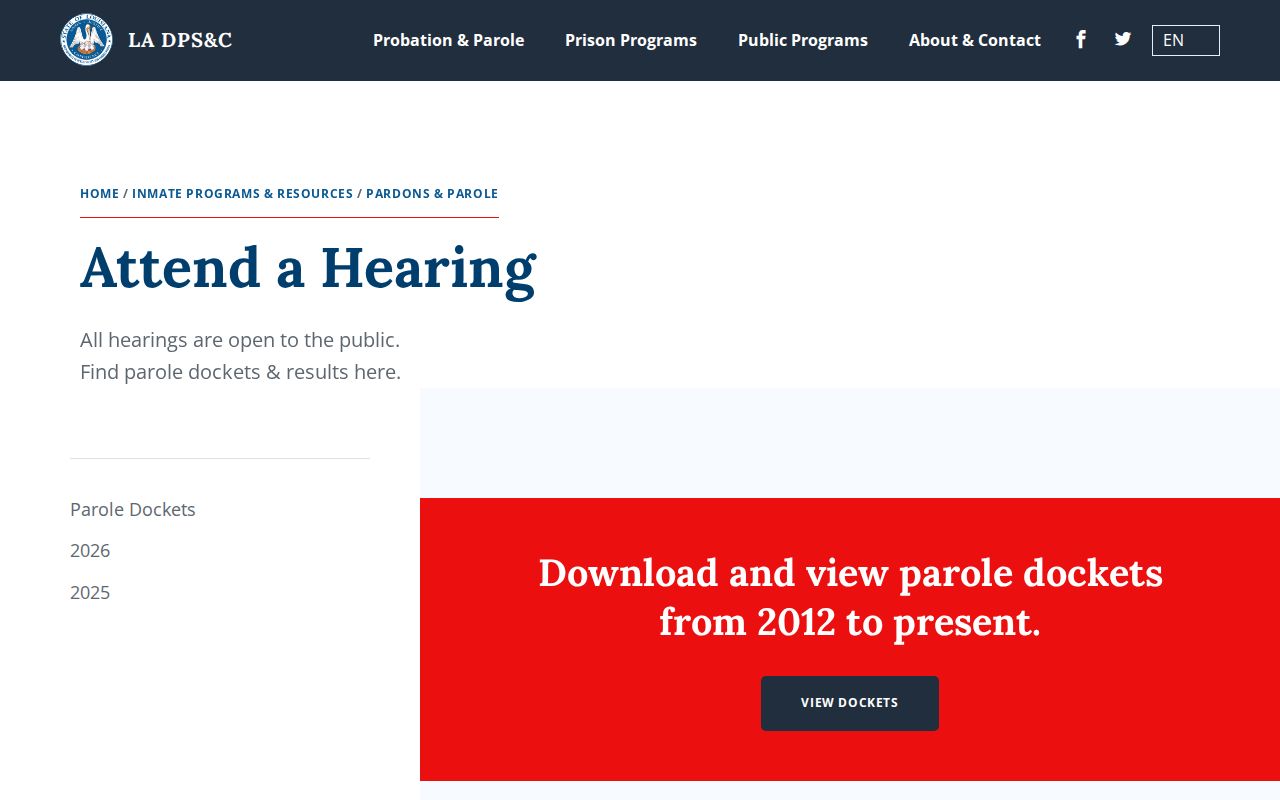
The calendar locates a proceeding. The posted result and later custody record establish what happened next.
Vermilion Supervision Warrants and Revocation
An absconder is a person alleged to have stopped reporting or otherwise failed to remain in contact. That label may lead to a supervision warrant. It does not prove that the person has already been arrested. No dedicated Vermilion Parish absconder list appeared in the reviewed VPSO prisoner interface, so verify a warrant through the issuing agency or an official law-enforcement notice.
Revocation is the process that may cancel parole or probation after an alleged violation. For parole, DPS&C describes preliminary-hearing rights after execution of a warrant, followed when appropriate by a Committee on Parole proceeding. The revocation schedules and results page says hearings generally begin at 8:30 a.m. and its pages are updated at noon on weekdays, subject to change.
Check the official revocation docket source for the current schedule and result.
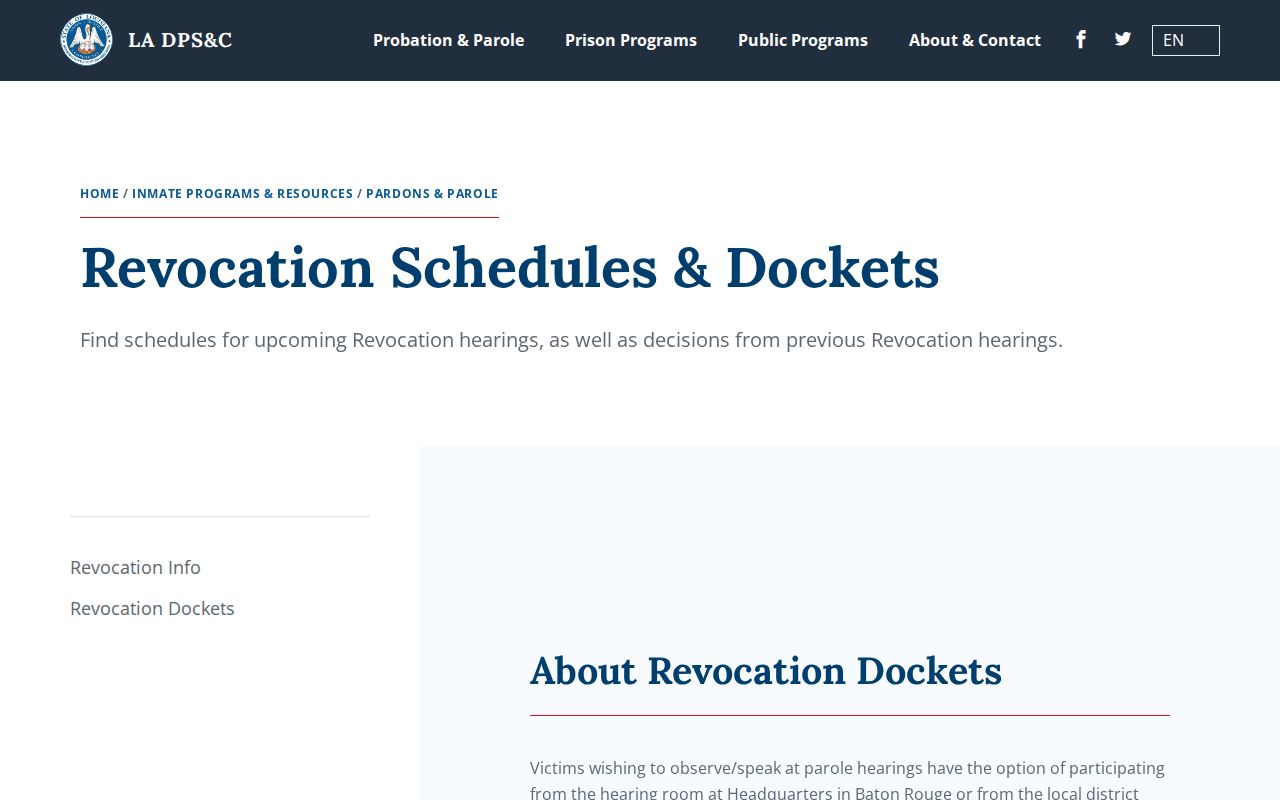
A revocation result can explain why a person who had been living in the community later returned to custody.
Note: An alleged violation, an active warrant, an arrest, and a final revocation are four separate events that must not be collapsed.
Vermilion Release Programs and Reentry
The VPSO Corrections Division documents GED preparation, literacy and vocational instruction, substance-use counseling, religious services, anger-management sessions, and supervised work opportunities inside the correctional center. These programs provide local release context. They are not proof that the sheriff operates a post-release service office, and participation does not establish a particular release date or supervision result.
A person leaving Vermilion Parish custody on probation may receive court and officer directions. Someone released from state confinement on parole follows DPS&C instructions. Program completion inside jail is a different record from supervision discharge. When a service history matters, seek the existing program record from its custodian and the supervision status from the Lafayette district.
Vermilion Release Identification Process
Louisiana’s transition and reentry process includes identification work before state release. DPS&C says staff seek at least two forms of identification, request birth-certificate and Social Security documents where needed, and may create a Louisiana identification card through an agreement with the Office of Motor Vehicles during the pre-release period.
Phase III of the state transition model begins at physical release and continues until discharge from community supervision. That wording marks two different milestones. Having identification ready can support the transition into the community, but it does not change whether parole was granted or when supervision legally ends.
- Eligibility
- The date or legal point at which parole consideration may become possible.
- Parole
- Community service of the remaining sentence under stated conditions after confinement.
- Probation
- Court-ordered community supervision that may not follow a prison term.
- Absconder
- A person alleged to have stopped reporting or maintaining required contact.
- Revocation
- A formal process that may return a supervised person to custody.
- Discharge
- Agency-confirmed completion of the sentence or supervision term.
Confirm Vermilion Supervision Discharge
A complete record separates the date confinement ended from the date supervision began, the projected end date, and confirmed discharge. Record the supervision type, responsible office, effective date, public warrant status, and any revocation. A projected full-term date can change. Never describe it as completed discharge until DPS&C or the court record confirms the term ended.
Louisiana public-record principles under R.S. 44:1 and R.S. 44:31 support focused requests for existing public records, subject to exemptions. Ask for the exact supervision or discharge record and accept lawful redaction. A parole docket, LAVNS status, court minute, and district confirmation each answer a different part of the question.
Note: Final discharge is the endpoint to verify; absence from a jail roster or an old LAVNS result cannot establish it alone.
Public Record Search
Sponsored Results